If you’ve read some of my past articles—like this or this—you won’t be surprised to hear I sometimes poke fun at myself by telling folks I’m wearing my tinfoil hat.
Twice in the last couple weeks, people did not know what I meant by that term;“tinfoil hat.” That gave me the chance to describe how some people think aliens or the government is tuning in to their brain waves, so they feel the need to wear a tinfoil hat to thwart the bad guys’ efforts like the character John Malkovich played in the movie “Red,” Marvin Boggs.
Each time, we chuckled then continued with the conversation.
Ha ha ha. Silly Dan.
But it’s not silly. While I don’t take precautions to protect me from little green men, I do things to make it as difficult as possible for data brokers and online advertisers to build a profile on me based on my digital activity.
Blocking The Bad Actors
I do this because, by using multiple bits of information about a person, companies charge different rates for similar products. It’s in my best interest to make this as difficult as possible so I pay a fair price and not what somebody else thinks I should pay.
Right now, data brokers are selling detailed profiles about your shopping habits, your health searches, your financial situation, etc. to companies that use it to charge you more than someone else pays for the exact same thing.
Don’t believe me? Ask your next airplane seat mate what they paid for their ticket, or ask a person in a hotel lobby what they paid for their room, and you’ll see this dynamic at work.
A key component of my privacy workflow is to use unique or masked email addresses.
I like to think it’s one way I’m taking control in a world that feels increasingly invasive.
It Seemed Like A Simpler Time
Previously, data brokers operated largely in the shadows. Sure, advertisers who relied on them to identify and reach targets were aware, but that was before the general public heard about them. And it before regulations provided a clear, central way to control how they used your data.
That’s changed as I wrote about earlier. Three of the largest data companies now make it possible to opt out of their systems.
Unfortunately, there are hundreds of data brokers scooping up your data and selling it to your grocery store or the airline you plan to use for vacation. Those companies, the brands you “trust,” are charging you as much as they believe you’re likely to pay based on what they know about you.
That came into sharp focus for me last year when the email I used to sign in to my electric account, my main Outlook email, showed up in a data breach.
My Wakeup Call
When my login account got shared on the dark web, a few thoughts came to mind.
First, dammit, because there was no way to know who had connected what digital dots about me, and what else I needed to be concerned about.
And then, what do I do about it?
I decided to use unique, or masked, emails because they are an effective way to make it harder for data companies to build your profile.
Opting to no longer use the same email everywhere was Job One. Then I needed a way to do it.
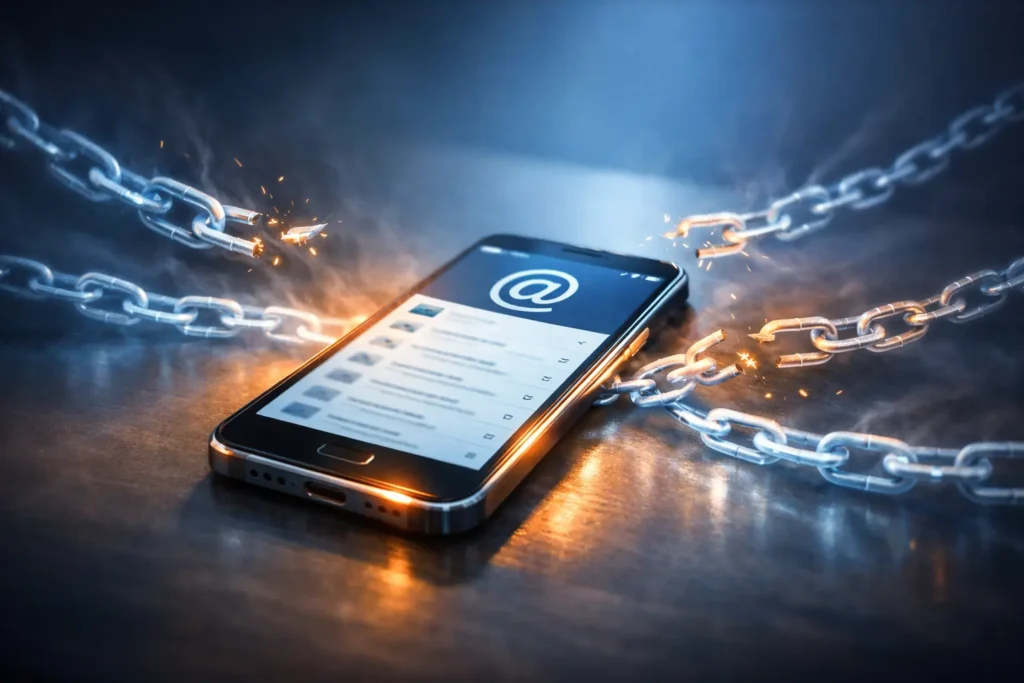
Breaking My Chains
One method is to use Sign in with Apple as it allows me to not share my real email with a company. The drawback is it is only available on limited websites and apps, so it’s not a total solution.
I also used to use Hide My Email from Apple. It’s an effective way of providing a unique email when creating an account because, if you no longer want to receive emails from the company, you turn off the address.
The service is included with iCloud+. At 99 cents a month, its a small price to pay for security.
But Hide My Email is clunky. Its buried in iCloud settings and slows me down.
As I started thinking more seriously about this, I knew I needed a better solution. Whatever I chose needed to provide a way to easily generate unique, or masked addresses, to be available everywhere, and to address some of Apple Mail’s usability challenges like search and sync.
After much study, I chose Fastmail as my email provider, and have been very pleased. Unlike Gmail or Outlook, Fastmail doesn’t make money off my data. It’s in the email business. To me, that distinction matters.
Four Clicks to Confidence
Fastmail runs as a web app, so it is available everywhere I have internet access. It enables me to, in four quick clicks, generate a unique, masked email for any account I set up.
The company is none the wiser. Any email they send shows up in a single inbox where all my messages land. And when I no longer want to hear from them, I delete the address.
This provides me peace of mind, privacy, and control over every relationship with a company. Today, when it often feels like there is very little we can actually control, I consider owning how a company can engage with me and being able to decide when I no longer want to hear from it is worth those four clicks.
The masked email makes it impossible for a data broker or anyone else to connect the unique email to other services I use.
You can have that same level of control today. If you’re willing to begin.
Cleaning Your Digital Slate
You can begin to create your own privacy workflow by scheduling 30 minutes with me now. We’ll talk through where your data is most exposed, and then I’ll use that information to craft a plan to address your biggest gap first.
No jargon. No judgement. Just a solid first step for you.
If you’re not yet ready to take that step, sign up for my weekly email newsletter now. Every week, I write articles like this sharing both tips and technigues for helping you use personal technology smarter as well as ways to understand and leverage the fast-changing world of artificial intelligence.
Sign up now at this link and I’ll send you one email every Monday.
It’s the smart move to improve how you manage your technology today.
No tinfoil hat needed. Just four clicks, and little bit of courage.
A whole lot of us are about to watch hours upon hours of live television. And none of us will be alone when we do it. From the Super Bowl to the Winter Olympics plus Read more
I have little interest in drinking from the firehose of artificial intelligence news. Instead, I keep my ears peeled for signals in the noise. What information feels so counterintuitive that I have to stop and Read more
New is fun. It’s exciting to install a new app, to start using a new service. But they all come with a checkbox. And all those little checkboxes come with terms, conditions, and policies which Read more









2 Comments
Your TV Sold Your Super Bowl Watch Party to Strangers · February 8, 2026 at 15:05
[…] I wrote about recently, companies use multiple bits of information about you to charge different rates for similar […]
Your TV Is Selling Your Super Bowl Watch Party to Strangers · February 8, 2026 at 14:55
[…] I wrote about recently, companies use multiple bits of information about you to charge different rates for similar […]
Comments are closed.