A whole lot of us are about to watch hours upon hours of live television. And none of us will be alone when we do it.
From the Super Bowl to the Winter Olympics plus everything else we stream, audio and video, it all generates profile data which our services and smart televisions sell to data brokers and other third parties.
Even I haven’t been able to escape their reach. After installing an antenna in the attic and a device to catch the video signal and send it via WiFi to my television, they got me.
I thought, considering how Google monetizes everything a person does in Chrome, Gmail, and all its services, by cancelling the YouTube TV account tied to my Gmail address, I would gain some privacy.
Turns out, dagnabbit, I was wrong.
Data brokers are so embedded into the system they’ve figured out how to monetize what a person watches with an over-the-air antenna in addition to how they monetize your activity on Netflix, YouTube, and other streaming services you use.
So, unless you opt out, anytime you “Netflix and chill,” there’s untold others in the room watching along with you.
You didn’t know that?
It’s very simple.
Every Show You Watch
Think of your streaming history as a digital diary. That diary is a living catalog of every song you listen to, every show you binge, how long you watch, when you listen, where you watch, etc.
And you gave the data brokers the key to your digital diary when you accepted the terms of service on your Netflix, Peacock, Tubi, Spotify, or other streaming service.
Didn’t read the terms? You’re not alone. Almost nobody reads those things.
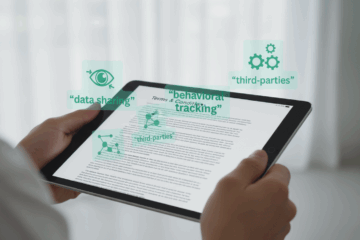
However, when you do, the scope of what’s happening comes into focus. Here are a few key quotes to illustrate:
Peacock: “We provide third parties such as advertising partners… information… device information… browsing history or app usage… geolocation… inference data… to recognize you across devices and enable marketing… The disclosure… may be considered a ‘sale’… and… targeted advertising.”
Which means they tell ad partners how you watch, what you watch, and where you watch it.
Tubi: “For the purposes of targeted advertising… Advertising technology companies; advertisers” and includes browsing/activity and non-precise geolocation…. Tubi may share information… with business partners to permit them to send you marketing communications consistent with your choices.”
Which means they sell your data so advertisers can send you marketing messages tailored to get you to buy stuff.
Spotify: “Tailored advertising controls”): tailored advertising uses “information about your use of our services and other websites and mobile apps… also known as… targeted advertising… or ‘sharing’ for… cross-context behavioural advertising.”
Which means they tell advertisers what you listen to and where you listen so they can serve you more customized ads.
So what, you ask? Why should you care about this?
Connecting the Dots
As I wrote about recently, companies use multiple bits of information about you to charge different rates for similar products, to serve additional messages to you, and, most sinister from my perspective, to build profiles of you.
Data brokers build detailed profiles about you including the shows you watch, when you watch them, what songs you listen to, plus your shopping habits, and your financial situation, then sell those profiles to other companies who will use it for whatever they choose.
Watched “This Old House” on Pluto TV last night? Don’t be surprised to see Home Depot or Lowe’s ads on Facebook in a few days.
Watching CNN or Fox News on YouTube TV to catch up on current events? Your political leanings are being refined in your profile to align with that activity.
And it’s not just streaming services. Smart TV makers like Vizio were caught selling second-by-second viewing data to data brokers. Those brokers matched a TV’s IP address to the household and added age, income, and family size to a profile.
In other words, they didn’t just know someone watched a home improvement show. They knew WHO watched it, and they tracked that interest across the person’s phone and computer.
The modern advertising industry thrives on personal data. And it relies on snooping in your digital diary whenever it wants to in order to keep its profiles fresh.
Don’t want its eyes there?
Here are a few simple steps you can take.
Lock Your Diary
Here are some quick things you can do before kickoff to limit your exposure.
First, educate yourself. Pick your most used service and do an online search with its name plus the words “privacy policy” or “terms of service.” On the web pages found, search for the words “opt out.” Review the information, and follow the instructions to limit how much information about you the service can share with or sell to others.
Check your Smart TV settings. Most Samsung, LG, and Vizio TVs have hidden “viewing data” collection turned ON by default. Look for Settings → Privacy → and disable anything mentioning “viewing information” or “interest-based ads.”
If you prefer an AI assist, use my Privacy Policy Assistant. The free tool helps you decode confusing privacy policies or terms of service by asking you a few questions, reviewing documents you provide, then returning a summary of potential concerns.
There are two versions of the assistant depending on which you prefer to use:
And if you want some personal assistance with figuring out how exposed you may be and how to reduce it, book a free 30-minute consultation call with me. We’ll audit your biggest privacy exposure and fix one thing together in the first call.
You decide if want to sign up for my personal tech coaching. The choice is yours.
Closing My Loop
And the choice was mine to opt out of the data collection performed by the Tablo TV device I installed a couple months ago.
Thankfully, I limited my exposure to creating the Tablo TV account using a masked email address as I described in this post. Because of that, anything the company gleaned about how I used its product could not easily be associated with any other data point. I used that masked email only for Tablo.
My loop is closed. Wish I would have known it sooner, but it’s closed now.
Don’t keep feeding the advertising industrial monolith. Use the simple steps above to lock your digital diary and keep what you do on streaming services private.
If you’ve read some of my past articles—like this or this—you won’t be surprised to hear I sometimes poke fun at myself by telling folks I’m wearing my tinfoil hat. Twice in the last couple Read more
I have little interest in drinking from the firehose of artificial intelligence news. Instead, I keep my ears peeled for signals in the noise. What information feels so counterintuitive that I have to stop and Read more
New is fun. It’s exciting to install a new app, to start using a new service. But they all come with a checkbox. And all those little checkboxes come with terms, conditions, and policies which Read more