Most People Won’t Care If AI Made It. Why You Should.
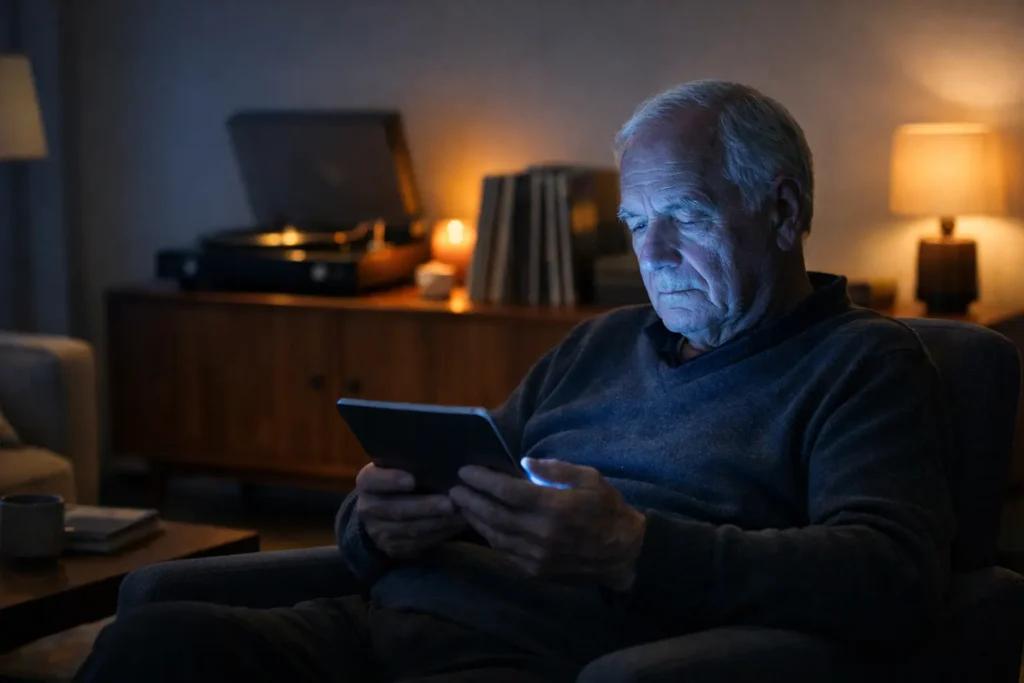
Whenever I help my 80-something father with his iPad, I check YouTube to see what he’s watched lately. His feed is filled with AI Slop; fake videos dramatizing seemingly real events trumped up to look like news coverage.
The videos have disclaimers, but he never reads them. According to Mom, Dad watches a lot of videos.
I hate that he’s watching that crap as much as, if not more, than he probably hated the music I listened to growing up. Quiet Riot, Molly Hatchet, and Adam and the Ants were nobody’s idea of high culture, but the cassette tapes and albums I bought were at least produced by real people making music together in a room.
People like what they like.
So why should I care about the videos Dad watches?
Because I know they’re fake. Because he doesn’t. And because, in miniature, it frames a key tradeoff many of us are willing to make without knowing the cost it may exact.
We all have a choice. And many of us will decide to not decide.
Content With Good Enough
Author and entrepreneuer Joe Pulizzi has an opinion about what’s about to happen, if not already happening, with content. In a recent blog post, writing about the hand wringing some creators engage in about AI use, Pulizzi wrote:
“Should creators disclose AI use? How much AI is acceptable? Where is the ethical line?
These debates assume the audience is paying attention to the production process.
They are not.
Audiences care about whether the content does its job.
Does it teach them something? Does it entertain them? Does it help them solve a problem? Does it change the way they think?
If the answer is yes, the production method becomes irrelevant.”
Unfortunately, I believe he is right.
Geez, it almost hurt to type that sentence, but I can’t ignore what is happening with my own posts.
Some of the posts for which I’ve received the most comments are the most vulnerable, the most human ones I’ve written. They reveal something about my life or about how I think or feel.
Then I look at how posts perform on my website. What does well there is content in which I provide unique solutions to problems — e.g. disabling WiFi calling to receive 2FA text messages — or when I mention Andrej Karpathy or Palmer Luckey and take exception to something they said or wrote.
The content that’s “good enough,” that does a specific job, draws web visits and keeps people on the site longer. The heartfelt, introspective posts elicits comments and conversation and not many page views.
The human stuff is nice. The retail stuff gets traffic.
That’s disappointing. And I’m not the only one seeing this.
Art Will Win
Friend and mentor Mark Schaefer wrote last week about the tension he’s seeing in content creation and how it shows up in an AI enriched world:
“I was in conversation with my brilliant friend Mitch Joel when we first tossed around this idea. When everyone is chasing attention, perhaps the future is intimacy.
“I care less about what everyone else is obsessed with and more about what deepens what I already care about,” he said. “It’s about how deeply one message can land… and where it leads me next. Content that moves from viral reach to emotional proximity.”
There is a word for that type of intimate content: Art.
Mark went on to write eloquently about the idea that people can win by creating intimacy, by materially connecting with others. He acknowledged there is no way to be smarter or faster or more prolific than AI, and I agree with him.
He’s right. Mark is 100% right about this.
But I do not think many of us are going care enough in the long run for it to make a difference.
We won’t because, as I’ve started to realize, making intentional choices about what I watch and listen to doesn’t align me with most people.
Make The Most Human Choices
I consume content more mindfully now than ever before.
I subscribed to The Criterion Channel and canceled other streaming services including Netflix. Criterion features some of the most incredible films from around the world.
I bought an internet radio so I could listen to some incredible stations from around the country. Favorites right now include WXPN, WRTI Jazz, and KDFC.
And I recently refinished a cabinet so I could enjoy vinyl records. Miles Davis’ Kind of Blue sounds pretty sweet.
Much of my content consumption now is intentional. I have to decide what makes it into my brain. Same goes for news articles I read and how I spend time away from the desk.
But when I’m with other people, I often have no idea what they’re talking about.
Near the end of a meeting last Friday, the host asked people on the call if they had seen the latest episode of some show. Others chimed in. What they thought about earlier episodes. What they were looking forward to.
Had they been entertained? Undoubtedly.
Would they have cared if AI had written the show? Likely not.
Big Deal. So What?
I’m not going to pretend I have answer to this conundrum.
Joe Pulizzi is right. Most people aren’t going to care one iota how the content they consume is produced. To them, flame wars about how much AI is used to produce the next Marvel blockbuster is so much navel gazing.
Mark Schaefer is right. Art and human intimacy will win out in the long run, but only for those willing to care about it. People who value genuine connection will be able to find it and will, I expect, pay a premium for it.
Where are you going to land? Will you be willing to pay for a great newsletter, a meaty, substantial podcast, or to spend your time watching something a human being labored for years to create?
Because the danger is too many of us will not take the time to realize we have a choice between easy, simple, AI generated stuff and content which a human poured part of themselves into.
Dad may not stop watching AI slop videos. He’s in his 80s and he’s entertained.
But don’t you phone it in. Make one mindful choice this week to opt for the good stuff.


0 Comments