While roasting poblanos and jalapenos for swiss chard enchiladas this weekend, listening to Paul Roetzer and Mike Kaput in episode 237 of “The Artificial Intelligence Show” talk about a recent MIT report and its recommendation for core changes at the school, “the curious incident of the dog in the night-time” leapt to mind.
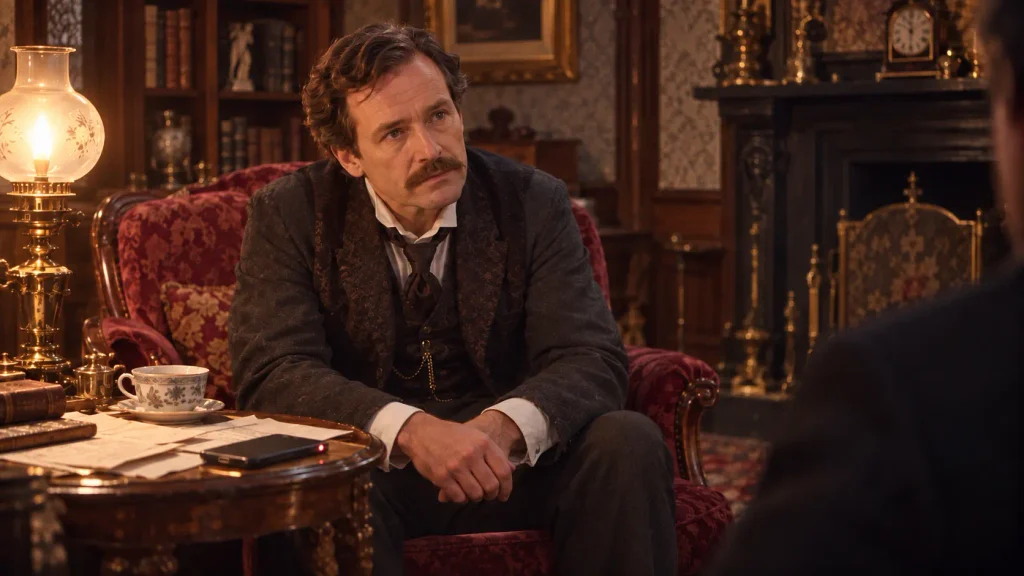
If you’re not familiar with Sherlock Holmes — and you truly should be — that’s a reference to the negative signal Holmes detected in Arthur Conan Doyle’s story, “The Adventure of Silver Blaze.” Long story short, Holmes deduced the identity of the murderer in the case when he hit upon the fact that a watchdog had not barked when the evil doer was on the scene.
The dog not barking is a classic example of a negative signal. It’s a way to describe something conspicuous by its absence.
And that’s exactly what I thought of when Roetzer and Kaput said the MIT report included observations like:
“decreased attendance at office hours, reduced participation in online discussions, and, as we heard anecdotally, a drop in in-person study groups in dorms, libraries, and other study spaces.”
Three years after generative artificial intelligence burst onto the scene, its impacts are being felt in many ways. Some of them are easy to detect, like the ongoing passionate debate about data center development and recent calls by heads of major AI labs to slow the meteoric pace of AI development.
Other impacts are conspicuous by their absence like the MIT students choosing to use LLMs to learn challenging material instead of visiting a professor’s office. Or businesses buying licenses for AI tools without figuring out how they will improve the business.
The Same Absence
Although a company may want to use AI, it may be hard pressed to justify its business case.
That’s where I can help.
And one of the key ways I do that is by providing strategic AI consulting to businesses to help them discover what’s missing for them with artificial intelligence.
One Missing Piece
As an example, I recently worked with an organization which had bought a company-wide AI license. They knew AI could help, but they had not figured out how to unlock the power contained in that budget expenditure line.
How did I help?
I listened. A lot.
I talked with one of their key employees for two hours. We discussed their processes and workflows; all the things they do in a typical week. And then I created several recommendations for ways I could help them using AI, always with them in control, to aid their operation.
After we worked together, they had a functioning assistant they could use to document every process an employee does. The assistant asks questions, clarifies details, then produces a process document they can save locally to use whenever they need it. It’s even able to update the document later when changes are needed.
Using AI, the organization derived a real benefit. It went from no documented process to having a tool which produces the documents for them in minutes.
It used to have a conspicuous absence, but it no longer does.
How I Work
The Strategic AI Consulting feeds something foundational for me and the teams I work with. Because every person and every situation is different, I don’t walk in the door with a one-size-fits-all plan.
I listen to the pain points. I ask questions. And I listen to the answers; those spoken and unspoken.
From that conversation, I create a proposal describing how I can help, how long it will take, and the fee. Once the proposal is accepted, I work doggedly to deliver the desired outcome.
If you are struggling to figure out how you or your organization can leverage AI to benefit your processes, your customers, or your bottom line, we should talk.
The first step is a free 15-minute discovery call you can schedule using this booking link. No strings attached and no credit card required.
And I’ll even share the enchilada recipe, if you want.
This is my work. These are my words. That is a promise I make to myself. I am 20 months into building a personal brand and a business while also living a full, rich life. Read more
Note: This post was drafted with AI and edited by me. I’ve since changed how I do that. Here’s why. A few weeks ago at a Harrisburg Chamber coffee, I met a guy who works Read more
I traveled to Scotland with a friend years ago. We still love to talk about the Scotch tasting we enjoyed at the Balvenie distillery. Sitting around a table, sipping some amazing 30+ year old whisky, Read more








0 Comments